
-
Exploring Social Justice in Research: Reflections from the SCDTP Final Year Conference
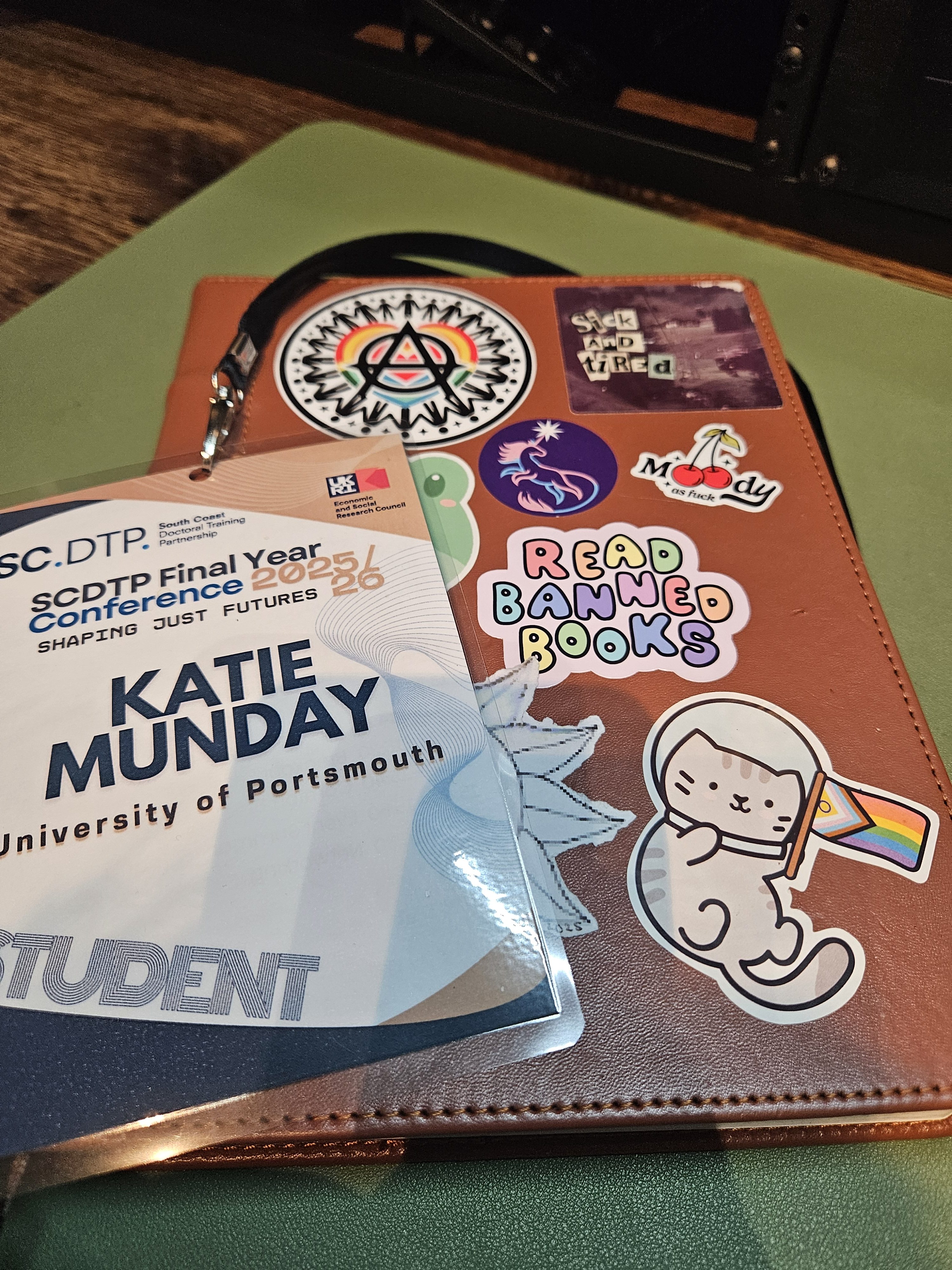
The South Coast Doctoral Training Partnership End of Year Conference 2025 focused on love and social justice in research. Dr. Maisha Islam and Mr. Pascal Matthias delivered powerful keynotes on racial equity and compassion in academia. The event fostered discussions on inclusivity, knowledge creation, and confronting institutional inequities, marking a meaningful gathering for transformative research.
-
My Research

Katie Munday, a PhD candidate at the University of Portsmouth, researches the experiences of transgender and gender-diverse autistic adults in accessing health and social care in the UK. Their community-based projects focus on healthcare accessibility, substance use in autistic individuals, and improving cancer service resources for marginalised communities.
-
2025 in Review: Advocacy Wins and Personal Growth

The year was transformative, marked by advocacy wins such as the closure of the Spectrum 10K project, significant academic achievements including the completion of a PhD year, and a strong sense of community in research. Ongoing efforts highlight the importance of Autistic voices and mental health, fueling hope for future progress.
-
Philosophical Foundations: Ontology and Epistemology Explained

The author reflects on their difficulty understanding ontology and epistemology during their undergraduate studies, ultimately identifying as a relativist-constructionist. They explain ontology as the exploration of existence and reality perception, while epistemology examines knowledge acquisition. Different epistemological perspectives include objectivism, constructionism, and subjectivism, shaping research approaches and interpretations.
-
Breaking the Model: On Cisgenderism, Ableism, and Academic Survival

The blog discusses a conversation on The Autism Podcast addressing issues of cisgenderism, ableism, and intersectionality, particularly for trans autistic individuals in healthcare. The author shares experiences about community involvement, the challenges faced by autistic youth, substance use among autistic adults, and the complexities of research within a deficit-oriented psychological field.
-
Navigating Work-Life Balance in PhD Pursuits

The author emphasizes that work/life balance is complex during a PhD, particularly within their community. They critique the pressure to prioritize studies, leading to burnout among students. Drawing from personal experiences, including an autism diagnosis, they advocate for self-awareness in managing mental wellbeing, while grappling with systemic challenges in academia.
-
Safe Storytelling in Academia: A Critical Exploration

The author shares insights about community-based knowledge from trans Autistic individuals, emphasizing the importance of honoring and protecting these lived experiences. They grapple with how to navigate sharing these stories in academic contexts, questioning what knowledge should be disclosed and focusing on safe, community-driven storytelling over traditional research methods.
-
Promoting LGBTQIA+ Equity in Education: Insights from a Researcher

LGBTQIA+ justice involves recognising and valuing individuals in the community, aiming for equity and allied liberation. The author advocates for visibility and accountability within academic settings, confronting transphobia while supporting trans+ individuals. They emphasise the importance of boundaries and creating supportive environments for LGBTQIA+ liberation, amid ongoing challenges in academia.
-
Enhancing Accessibility for Autistic Clients in Substance Use Services

I am part-way through my SCDTP internship with Portsmouth City Council, focusing on enhancing accessibility for Autistic clients in substance use services. Utilising findings from the Autistic Substance Use Network, I am auditing training and Recovery Hub environments while collaborating with LGBTQIA+ recovery workers to develop a comprehensive accessibility blueprint.
-
Embracing Authenticity in Academic Presentations

The author reflects on speaking at various queer and autistic conferences, emphasizing the challenges of conforming to normative presentation styles. They found comfort in familiar environments and shared experiences with attendees. Despite difficulties, they aimed for a conversational approach, valuing personal storytelling and community engagement over traditional presentation norms.