
-
Double Empathy and misgendering

Autistic people must often meet others more than halfway in conversations and social expectations. Social interactions are often dotted with unanswered questions, unknowable facial expressions and nonsensical terminology which we are expected to translate, understand and appropriately respond to within seconds. When things are misinterpreted it is usually seen as the Autistic person’s fault, as…
-
Allies and safe spaces
Allyship is an ongoing commitment toward understanding and supporting those with different identities and experiences. Performative actions are not enough; true allyship requires genuine effort and involvement. Organizations often claim to support marginalized groups without truly understanding their experiences. Creating truly safe and inclusive spaces requires genuine effort and a willingness to actively fight for…
-
Creating Safe Spaces book review
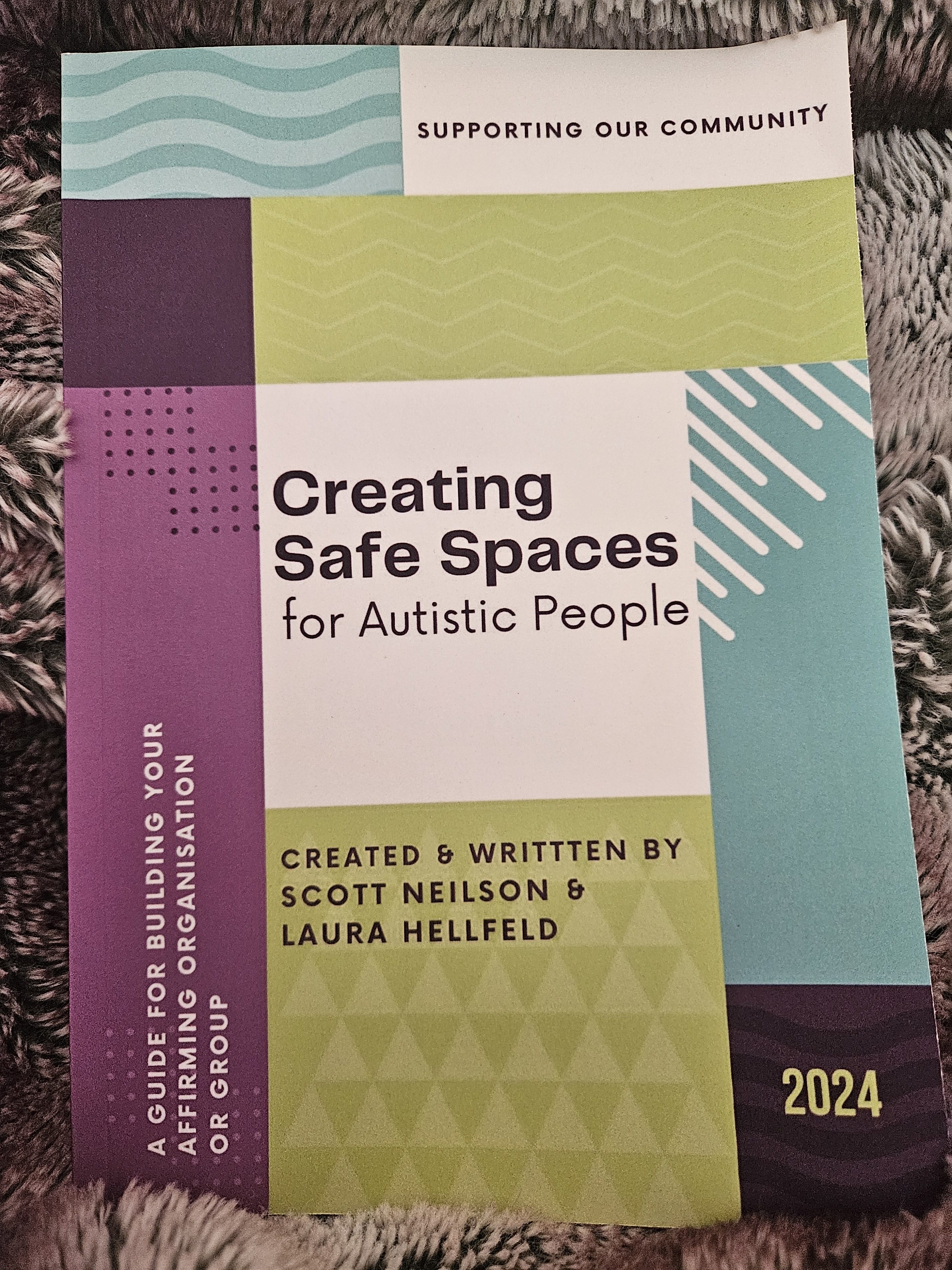
“Creating Safe Spaces for Autistic People” by Scott Neilson and Laura Hellfeld provides a comprehensive guide for establishing inclusive environments. The authors, along with other autistic advocates, address topics such as language use, participant support, and accessibility. Ranging from sensory tools to public transport guidance, this well-structured resource is valuable for professionals supporting autistic individuals.
-
A short guide to gender for Autistic children and young people

-
Autistic Burnout: What is it, and why does it happen?

Autistic burnout is a heightened state of stress, affecting energy, emotions, and sensory management. It’s often triggered by social and work-related factors, leading to emotional dysregulation, sensory overload, and brain fog. This can result in a sense of isolation, frustration, and an overwhelming feeling of responsibilities without the energy to address them.
-
The importance of Autistic-led training and research

The struggle for Autistic trainers is common as non-Autistic individuals often take precedence. Organizations claim to support #AutismAwareness but refuse to pay Autistic individuals for their expertise. Even those who include Autistic co-creators may overlook their lived experience. The focus must shift to including Autistic individuals in leadership and fairly compensating them.
-
Interview with TransActual for Autism Acceptance Month

-
No, Joe Wicks, ADHD isn’t a dietary issue

Joe Wicks, aka The Body Coach, has recently suggested (on a BBC podcast) that the “surge” in childhood ADHD diagnoses is linked to poor diet. He shared: “Looking back now, there’s no doubt the food I was eating was directly linked to my behaviour. I was never diagnosed with ADHD, but I think nowadays it’s…
-
School toilets under lock and key

‘Cages’ have been installed at Foxford Community School, Coventry, to stop students from going to the toilet. Pupils are now unable to use the toilet during lessons and can only make a bathroom trip if supervised. Children aged 10-16 years old have to ask permission to go to the bathroom and go supervised. We all…
-
UK university ethics applications – a neurodivergent nightmare?

Policies within UK universities outline that research undertaken therein requires ethical review, however the process of obtaining favourable opinion can be inaccessible to Autistic ADHD students due to ableism within Higher Education. I wanted to know whether I was the only Autistic and ADHD / Attention Hyperactive person who really struggled with my degree ethics…