
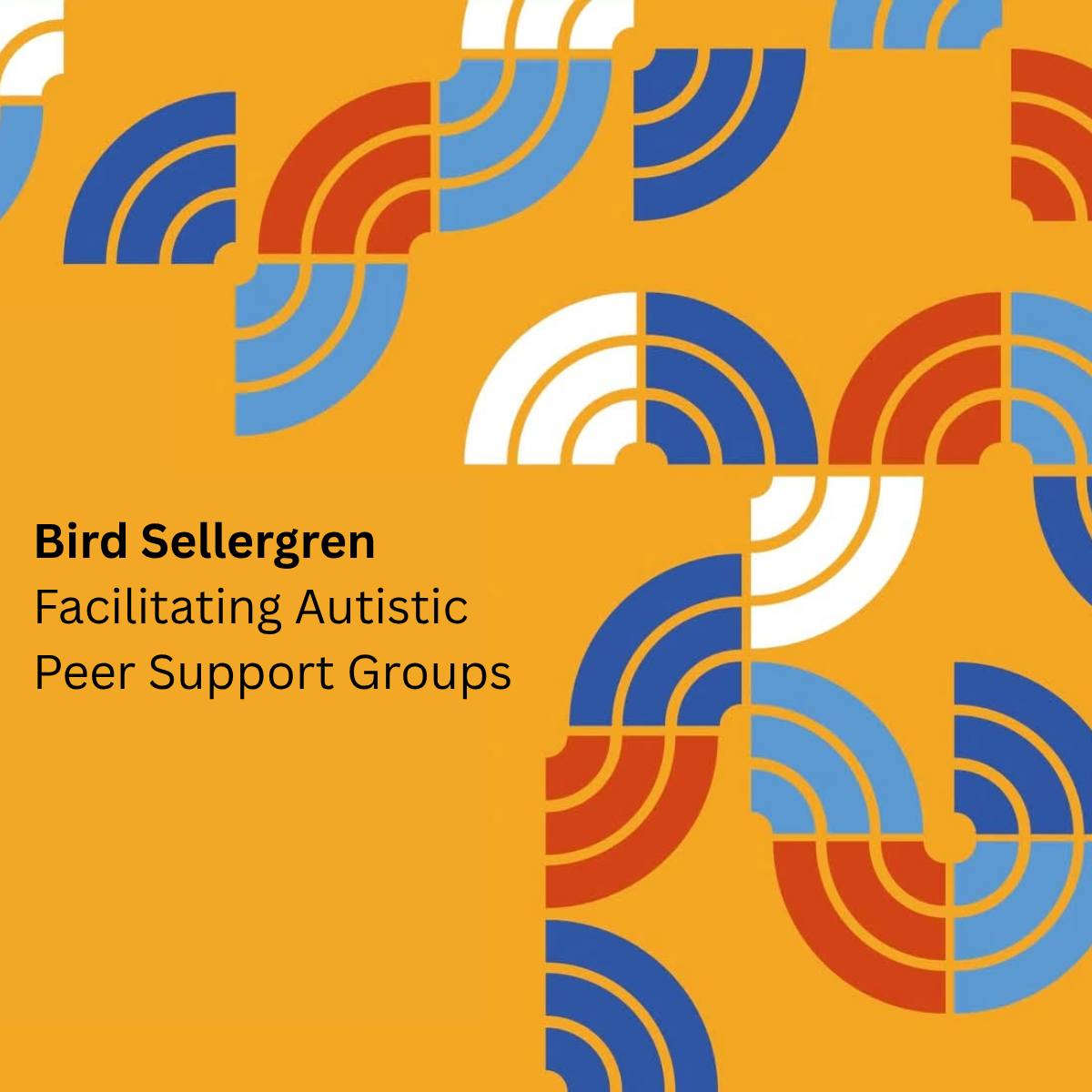
I had the honour to read a preview copy of Bird Sellergren‘s book Facilitating Autistic Peer Support Groups. Sellergren is an autistic educator, researcher, and coach based in San Francisco, focused on autism advocacy, access, and well-being. They are a board member of Bay Area Autism Collective, an autistic-led, non-profit organisation based in San Francisco that provides autism-affirming peer support groups and community spaces exclusively by and for autistic adults.
Facilitating Autistic Peer Support Groups is a practical and comprehensive handbook filled with facilitation strategies underpinned by respect, autonomy, emotional safety and transparency. Sellergren’s work is grounded in the neurodiversity paradigm and informed by feminist, decolonial, and intersectional frameworks. The book is split into four parts: foundations of the autistic peer support group; running the groups; trouble shooting and resolution; and taking care of yourself as a facilitator.
Foundations of the Autistic Peer Support Group
This introductory section presents the values, intentions and ethical principles that underpin liberatory Autistic peer support. Sellergren shares some common narratives of autism, including over-medicalisation and inequity in diagnosis and support. They advocate for understanding Autistic suffering as a response to the barriers we face as, not as individual fault. They establish the power of peer support groups for Autistic adults, who often have no formal support past childhood (if they receive support at all):
Autistic adults continue to face structural barriers such as unemployment, housing instability, and social exclusion. Peer support groups do not replace these services, but they fill an essential gap.
– page 21
Sellergren recognises the importance of not striving for perfection but for creating spaces that allow Autistic people to thrive as individuals and within community. Vitally, they suggest, facilitators hold the sessions but the Autistic groups members, as knowledge holders, should determine the direction of the sessions and the group as a whole.
Running the Groups
The second section outlines practical application, including organising meetings, clarifying roles, and maintaining emotional equilibrium. Sellergren appreciates that many Autistic people starting peer support often come into the space having experience trauma in other group settings, including school, healthcare and other social groups. Within these groups many of us have been bullied, misunderstood or pathologised. Sellergren illustrates the importance of centring Autistic communication and culture within peer support:
Group spaces that center autistic thought—and treat it as sufficient in itself—can restore confidence and sharpen self-understanding. This is not just about emotional support; it is about building power through clarity, connection, and the refusal to outsource one’s sense of truth.
– page 52
Chapter 6 – Group Values and Intersectional Perspectives, is my favourite chapter, in which Sellergren makes recommendations for creating Autistic peer support group agreements, grounded in consent, accessibility, and speaking with care. They offer a rejection of global north norms and an adoption of anti-ableism, including in the support of non-speaking group members:
Welcoming and encouraging non-speaking participants, chat-based contributions, assistive technology, and embodied communication is not simply about accommodating disability. It is an intentional act of resistance to ableist and neurotypical dominance. By centering autistic needs and preferences, we dismantle systems that have historically devalued and excluded us.
– page 88
Sellergren understands that facilitators do not need to be an expert of all intersections and oppressions but they should have a commitment to (un)learning and acknowledging that individuals are the experts on their own experiences.
Trouble Shooting and Resolution
Part three addresses the challenges facilitators may face within group spaces that use a trauma-informed approach. Sellergren suggests the use of simple mindfulness practices to regulate nervous systems to enable group trust, resilience and collective safety. This section is easy to dip in and out of when needed and uses a lot of tables and illustrations which are easy to follow.
Facilitators are responsible for guiding the group through intense or sensitive
moments in ways that allow all members to feel heard, supported, and
safe. This includes ensuring that one person’s emotional experience
does not overwhelm or dominate the shared space.– page 95
Taking Care of Yourself as a Facilitator
Part four centres the wellbeing of facilitators, encouraging the use of mindfulness, self-awareness and boundary setting. Sellergren, with their extensive background in Autistic group facilitation as an Autistic person understands the emotional complexity of such facilitation. They suggest checking-in with yourself before and during sessions, especially when emotions are running high.
They also reflect that Autistic facilitators can also come to the space with trauma and may need to ask themselves during heightened sessions: is my nervous system being activated right now? This section has scripts throughout which I adore:
I can sense that there are a lot of strong feelings in the room right now. Let’s take a moment to acknowledge that it’s okay to feel this way.
I’m noticing that I’m feeling a bit overwhelmed right now, so I’m going to take a moment to breathe. This is something we all can do.
– page 135
Final thoughts

Facilitating Autistic Peer Support Groups is a compassionate, empowering, and affirming guide. Sellergren’s practical wisdom and powerful commitment to autistic knowledge, relationality and autonomy make this an essential read for facilitators, practitioners and researchers alike.
Honestly, this book makes me want to start my own Autistic peer support group. And there are plenty of useful resources here to make that a reality.
There is a good use of images, tables and powerful quotes throughout and each chapter ends with useful provocations, case studies and discussion points. The quick reference guide at the back is useful, and this will be a book I will come back to again. There are some areas which I would like to see more references in, however, I love that Sellergren leans in to their own experience of facilitation, supported by their deepening understanding of decolonisation, feminism, and intersectionality. Facilitating Autistic Peer Support Group is a triumphant, go-to guide for anyone operating in the Autistic peer support space.
Facilitating Autistic Peer Support Groups is available for pre-order. Publishing date is 21st October 2026.