
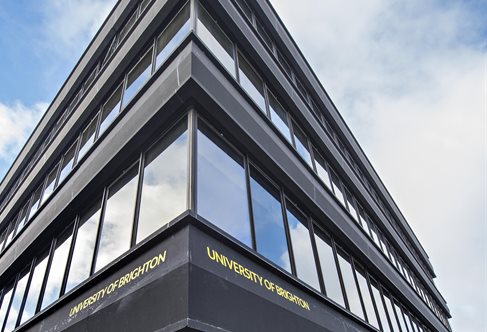
We were lucky enough to attend the SCDTP’s Queer Methodologies: Turning Theory into Practice two-day workshop run by Abby Barras and Nick McGlynn. This blog is a collaborative reflection on the experiences of being queer researchers with another attendee, Chris Lehmann.
Setting intentions
CL: We should never take for granted that we all come from the same place of knowing, understanding and acceptance for ourselves. In creating these queer spaces together, we need to address that potential inequity from the start. Setting our intentions allows us to get into the weeds of identity, of what we feel uncomfortable with and what makes us truly unique as human beings. We can share what triggers us and what moves us, enabling us to be as open as possible with one another at a time when many queer people in the world are being disappeared by society, governments and institutions.
KM: Agreed – there were some conversations on our table about being respectful around food and eating. This is not something I’ve heard much before (despite being on the end of some interesting remarks about my food choices over the years). It was refreshing for someone to say aloud, “It’s not okay to comment on what or how much someone is eating” It’s so simple, but what a lovely thing to hear validated in this space.
CL: By breaking the silence of assumptions and being honest about the challenges of being able to truly queer a space together, we can create new channels of expression and challenge traditional wisdom that can be accepted as truths by others. It is vital that we bring all the resources we can to these opportunities to reaffirm our queer solidarity, and that is exactly what this group did. Through this diligent work as a group, we not only made space for vulnerability but also built collective strength to continue our queer trajectory out into the wider world.
KM: It was definitely a safer and braver space to carefully unpack things. I wrote a reflective piece on the first night and decided to share it with everyone at the next-day check-in, and before I knew it, I was crying, and others were too. It’s cathartic to be in a space where people understand the struggle to be yourself fully in academia and outside in the ‘real world’. We don’t often get the opportunity to express our grief at the lives we could have led and the researchers (and humans) we could be if the world weren’t set on making things as difficult as possible for us to exist.

At the beginning of the workshop, we set intentions and expectations for the groups, both individually and as a group. The image shows one of the table’s expectations, which includes:
- Brave instead of a safe space
- Critique and extension
- Acknowledgement of privilege – who isn’t in this room?
What is a queer methodology?
CL: I was struck by how much I could challenge my own assumptions about methodological approaches once this group of fellow scholars granted me permission. Yet, that approval was never required, and it made me realise how challenging it can be to continue to queer our research when norms are so deeply embedded in societal expectations around learning and knowledge production.
KM: Maybe role modelling makes sense – as in we know we can do this theoretically, but what can this look like practically? I always learn the best in spaces where people are radical in their authenticity and open about how they go about in the world. It’s taken me a while to get comfortable with not having a definite answer to things. I now find that quite exciting because if the possibilities are endless, that means we can go anywhere with our research and methodology.
CL: I didn’t necessarily take away a list of queer methodological options or approaches; that in itself would be conforming to the expectations of traditional research. Instead, I adopted a deeply iterative process of unpicking, dissecting, and disrupting my own expectations of what queer means in the work I am doing. I know that this skill will need to be continuously developed, nurtured and deepened, along with greater confidence to challenge others who question this queer approach. Having found co-conspirators in this space, I feel hopeful that this is a method I can truly embed not only in scholarship but also in how I navigate my work, relationships, and wider engagement with the world around me.
KM: I think that doing work with queer participants (especially as queer researchers) means that our work is inherently based in queer methodology. I can’t/don’t do anything through a normative lens as a queer disabled person. I love the idea of nurturing the queerness of our work and what this means for us as humans, not just researchers. I think once we understand that we can queer everything, it is very liberating. What else can we question, unpick or fuck with?

Shifting anxieties
CL: Just hearing the word ‘anxiety’ can make my heart rate go up. I feel like we queer folk carry a burden of angst not shared by many others. A feeling of existential dread about the continuous coming out, safety worries, and everyday navigations that others in more normative bodies and sexualities don’t need to experience. Yet these challenges also present opportunities for growth, for connections with others through community.
Later in this blog, you will hear more from Katie and me about what community means to us, how people in a shared space of complete diversity and difference can acknowledge the anxieties we face in common, and how we can name them and work with them. We can approach these anxieties with fear, or we can instead queer them – we can be playful, we can open our arms to them and ask them to stay close. We can subvert the anxieties and use them as fuel for our passions and our commitments to one another.
Even as I write this blog, I am working through anxieties about how I write, what I say, who will read it, what it will mean for me as a person, a professional, a researcher, and my future prospects, hopes, and dreams. But instead of running away or allowing these anxieties to dominate my thoughts, I have run towards them. I have been able to do this through the encouragement of my queer peers, through queering our perception of anxieties. We can shift these mutual anxieties together, within the academy and beyond.
KM: I love that you shared this reflection. It hadn’t really occurred to me that writing a blog would be anxiety-making for you, which is just as well because I may not have asked you otherwise! Ah, being human is a weird old thing. I also felt uncomfortable when anxieties were brought up. I’ve got loads, many that echo yours and also the constant question of what all this research is for. Thinking about getting into academia whilst everyone around you tells you outright that it is a sinking ship, a sinking ship set alight and left adrift. It feels precarious, and I already think about where my community’s stories should lie, and that doesn’t sit neatly in the academy either. Centring love and connection is not part of the psychology department’s ethos!

Queer methodology in policy making
CL: I love that we can think about policy-making as a queer activity. Because I work in a field that considers both strategy and policy, the idea of doing this work from a queer perspective makes a lot of sense. However, for some reason, I genuinely had not thought about policy-making in this way before. The chance to talk about it in a space with others in Brighton somehow suddenly made it a possibility. I suppose I had always thought that in some ways, I walk a fine line in a biopolitical sense, considering how the work I do is defined as ‘population care and support’, but in the wrong hands, could easily become Foucault’s descriptions of governmental ‘population management and control’ (more on Foucault here).
By queering our approach to policy and strategy, we can reimagine ideas and methods as commons co-produced intentionally from a grassroots perspective rather than at an institutional level. Not only will this queer methodological approach to policy-making allow us to redress the imbalance of power, but it will also open up opportunities to think differently and create much deeper, more effective solutions in collaboration with people, rather than doing to them.
KM: I loved what was shared in the first slide of the workshops, “Queer methodology in policy is essentially an anti-establishment practice that offers a way to complicate our understanding of organisational life and ensure that policy is more inclusive, liberating, and reflective of diverse lived realities” I am thinking about this more as I progress through my PhD, how do we get knowledge we already hold as community members, as people with lived experience, into policy? What door do we need to knock on, and how loud do we need to bang? What pretty words do we need to use? What things will we need to compromise, to bend, or break? I am bleak about this because of the ongoing governmental violence towards trans and autistic people, and those of us who dare to be both. I think I may have accidentally slid back into the anxieties section…

We were invited to create a beer mat which represents our research. Mine shows two groups of people and a heart, representing participatory action research and then a yellowed scroll representing policy.
There is also a world stress ball with the University of Brighton printed on it (I first got a police car and soon threw that into another goody bag!).
Zine Making
We were invited to create a zine focused on our methodology and its relationship to queer scholarship.
CL: It was powerful to make something physical to take away as a zine, not only as a reminder for me, but as a way of demonstrating to others who weren’t there the impact of what can be achieved in just two days of exploring queer methodologies. I don’t view myself as particularly skilled in visual arts, so letting myself go and just enjoying the process of making something was liberating for me.
KM: I love a good keepsake from sessions like this; I find that creative sessions really let the real us out. It gives us another way to think deeply and intentionally about our work, what we want from it, and why we are doing it. Also, your zine looked brilliant! I still have mine on my bookshelf with my growing collection of zines. I am also getting some puffy letter stickers – they are a cool way to collage and zine.
CL: The zine-making brought on even deeper conversations between us whilst we worked; people were sharing stories, singing songs, exploring new ideas, and figuring out how we would continue to make queer spaces when we returned to the many parts of the country we all lived in.
KM: The Italian pop singing and dancing was just so delightful – it really cheered me up. It just shows that we can find belonging on different levels in the most unexpected of places. I find little pockets of joy, belonging and understanding, but, as you say, they are difficult to recreate or carry on. Maybe that is part of their magic – that this experience could only happen in that room in Brighton with that group of people, in our current states of unravelling. Another gem for the memory treasure chest.


CL: When I showed the zine to my partner after getting back to London that evening, she could feel the energy that the queer space had inspired for us all and also could understand my methodological approaches in ways that I verbally had really struggled to explain in the past. That realisation, in itself, has made me rethink how I describe what I am doing for my PhD, potentially using visual arts, music, and nature to explain what I am exploring.
KM: This made my creative researcher heart so happy! Even when these things aren’t ‘outputs’ of our studies (or perhaps because they aren’t) they are all the more vital. I often write poetry, which I have no intention of academising. These parts of our projects become ours, and that is so special and beautiful, especially when we can share them with loved ones, and they get a window into the crux of our work without being overwhelmed by the bigger picture.
CL: During one of our sessions on the first day, Katie and I spoke about mycelium and how that can be used as a metaphor for queer connectivity and for telling ‘queer time’, which for me are both nonlinear and non-hierarchical. By challenging conventional ideas about how we express the queer work that we do, we can open up new possibilities for inviting others to join our conversations.
Community Power

KM: I have felt really held today. Everyone was willing to give of themselves, their experiences, their understanding, their queer research awakenings. I felt connected, understood and valued. Others took the lead in ways that felt comfortable and liberating. I no longer had to tiptoe around others’ (or my own) anxieties, as we said them out loud. Naming them, articulating them, bringing them into the room with less fear. Allowing “the kimono to drop and to show our knickers” as one student’s shared (I’m now going to be using that expression all the time!)
I was looking forward to this retreat, and I have not been disappointed. I am constantly mesmerised by queer minds and queer thinking (in all the ways we can be and do queerness). These occasions always feel very open, raw and unapologetic – like I could say anything here and be accepted. All the weird, awkward parts of myself, all the bits I compartmentalise, shrink or ignore when in other spaces. There are very few spaces where I can be myself, fat, mad, crip, queer, trans – everything, a big jumbled mess of identities, experiences and embodiments. It is great to know I am sharing the liminal space of lived experience, activism, and research with so many powerful and beautiful others.
We may blink in the wake of fascism, but we do not close our eyes, our backs remain unturned, our eyes remain open to the searing sun-like burning of the kiarachy, tears streaming down our faces, manifesting tears of our discontent.
CL: Katie captures the feelings in the room so well. Of feeling held, being emotional, finding love and respect through our shared strengths and vulnerabilities. I was truly moved by the poem that he read, pausing for a moment to take in the room around me and notice how people were reacting with kindness, care, love and assurance. I was struck by how much braver this made me feel. I felt empowered to take these ideas and emotions back out onto the streets of Brighton, and as I made my way back to the train station after our final session, I cycled home from Kings Cross to my little flat in London. As I woke up the next day, knowing I had to get back to ‘real life’ without this group of amazing queer folk around me for safety and guidance, I realised I had a renewed energy – that, through this community, I still felt connected.
This was further emphasised by Katie’s generosity in opening up a space for Monday check-ins together via WhatsApp, something so welcome, thoughtful and meaningful. With this energy I had found, these connections, this community, I knew that it was ok to be enraged and sad at all of the atrocities and injustice going on in the world, but that it was also ok to find joy, hope and to actively practice gratitude. And most certainly, gratitude is what I feel for the space we found together, and the people I have stayed in touch with since.